
Open-Box and Refurbished Items: What the Condition Labels Actually Mean

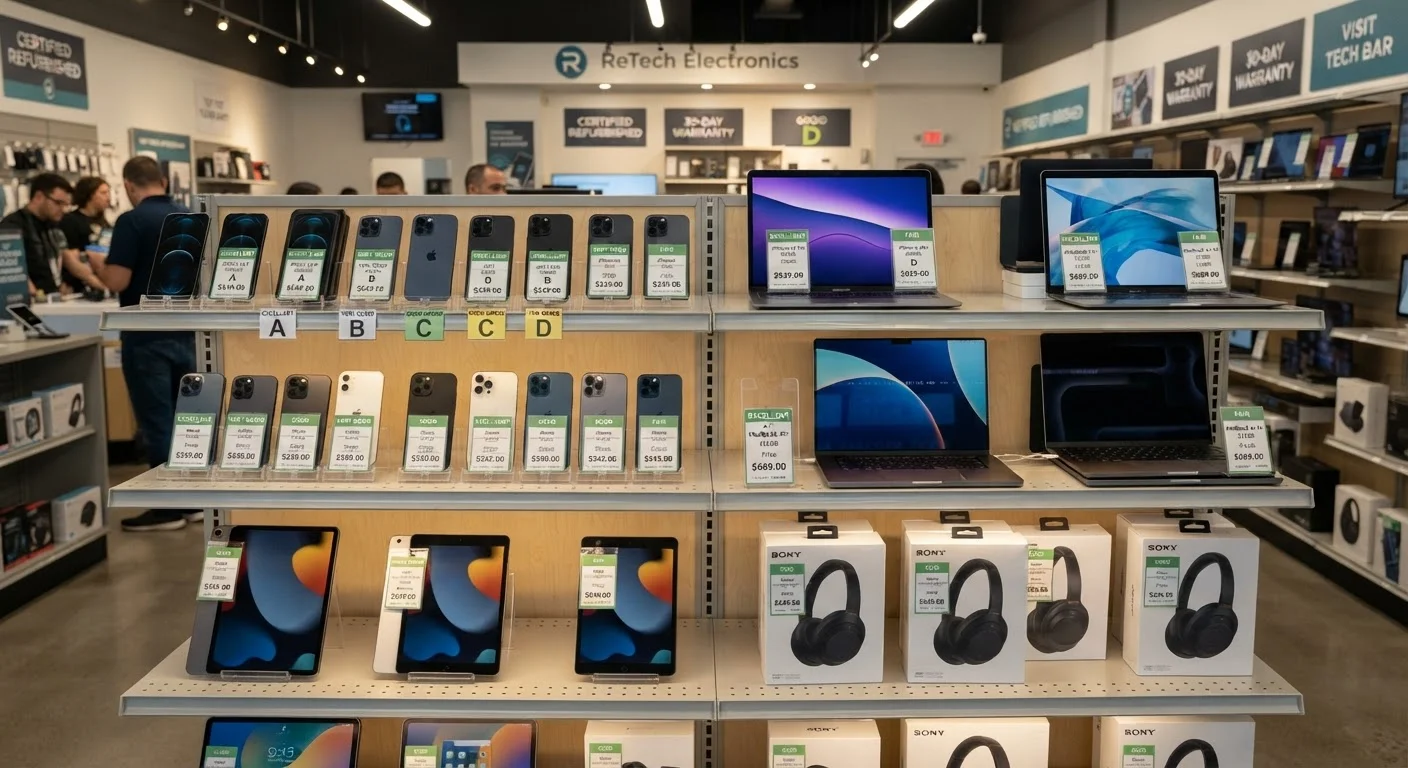
Photo: InsightsChief.com | Your Source Of Trusted Insights editorial
Key Takeaways
- Open-box means the product was returned or displayed - not necessarily repaired.
- Refurbished can mean manufacturer-certified or seller-refurbished, and the difference matters.
- Condition grades like 'Like New,' 'Good,' and 'Fair' follow no universal standard.
- Warranty coverage varies significantly by condition grade and seller type.
- Manufacturer-certified refurbished programs typically offer the strongest quality assurance.
- Always read the condition description in full, not just the grade label.
Why Condition Labels Are Confusing - and Why It Matters
Walk through any major electronics retailer or browse a resale marketplace and you'll encounter a patchwork of condition labels: Open Box, Like New, Certified Refurbished, Seller Refurbished, Good, Acceptable. These terms shape pricing and buyer expectations, yet no industry-wide standard governs what any of them must mean.
The financial stakes are real. A product labeled 'Like New' with no warranty is a very different purchase from one labeled 'Certified Refurbished' with a 90-day manufacturer guarantee - even if they're priced similarly. Understanding what's behind the label is the first step to making a purchase you won't regret.
No Universal Grading Standard Exists
Open-Box: Returns, Displays, and Damaged Packaging
Open-box is the broadest and least standardized category. It generally covers any product that was sold and returned by a customer, used as a floor display model, or had its original packaging opened or damaged before sale. The key distinction: open-box items typically haven't been inspected or repaired beyond a basic functionality check, if that.
Why does this matter? Because the original return reason is rarely disclosed. A returned item could be flawless - the buyer simply changed their mind. Or it could have a cosmetic defect, missing accessories, or a subtle functional issue the quick check didn't catch. At retail chains, open-box grading often uses an internal scale (e.g., Grade A, B, C) that corresponds to cosmetic condition, but these grades aren't published uniformly and vary by store.
What to look for:
- Whether all original accessories (cables, manuals, remote controls) are included
- Whether the return policy that applies to new items also covers open-box purchases
- The specific reason for the return, if disclosed
- Whether a manufacturer's warranty still applies or has been voided
Refurbished: A Spectrum from Certified to Seller-Level
Refurbished is a tiered category, and the tier you're buying from dramatically affects what you're getting.
Manufacturer Certified (or 'Certified Refurbished'): The original manufacturer tested, repaired, and repackaged the product using genuine parts. These programs typically include a limited warranty comparable in length to what new products receive. This is generally the most reliable refurbished tier.
Third-Party Certified: An authorized repair center - not the manufacturer - performed the refurbishment. Quality can be high, but it's worth checking whether the repairer is formally authorized by the brand.
Seller Refurbished: A marketplace seller restored the product independently. Testing standards, parts quality, and documentation vary widely. Seller ratings, detailed condition descriptions, and return policies become your primary quality signals here.
Check the Platform's Grading Key Before Shopping
On major resale platforms, grading scales like Like New, Very Good, Good, and Acceptable are platform-defined - not universal. A 'Good' grade on one marketplace permits scratches and minor wear; another platform's 'Good' may mean more significant cosmetic damage. Reading the written condition description (not just the grade) is essential.
How to Evaluate Any Condition Label Before You Buy
Regardless of where you're shopping, a consistent evaluation framework helps cut through labeling ambiguity. Just as independent testing often challenges assumptions about product quality - similar to how research on store brands vs. name brands reveals that labels don't always reflect underlying quality - condition grades require the same skeptical eye.
Five questions to ask before every purchase:
- Who performed the inspection? Manufacturer, authorized center, or independent seller?
- What warranty is included? Length, what it covers, and who honors it.
- What does the written description say? Look past the grade label to the actual condition notes.
- What's the return policy? Particularly important when the grade is subjective.
- Are all original components included? Missing cables or accessories affect usability and resale value.
Condition labels are a starting point, not a guarantee. Treating them as the beginning of your research - rather than the end - consistently leads to better purchasing decisions.
~15%
Typical discount on open-box vs. new retail
Consumer electronics retailers commonly price open-box items 10-20% below new, though discounts vary by product category and condition grade.
~30-50%
Potential savings on certified refurbished
Manufacturer-certified refurbished programs can offer savings in this range compared to new retail pricing, though actual discounts vary by product age and availability.
Frequently Asked Questions
The content provided on our blog site traverses numerous categories, offering readers valuable and practical information. Readers can use the editorial team’s research and data to gain more insights into their topics of interest. However, they are requested not to treat the articles as conclusive. The website team cannot be held responsible for differences in data or inaccuracies found across other platforms. Please also note that the site might also miss out on various schemes and offers available that the readers may find more beneficial than the ones we cover.