
Open Shelving vs. Upper Cabinets in a Kitchen Renovation

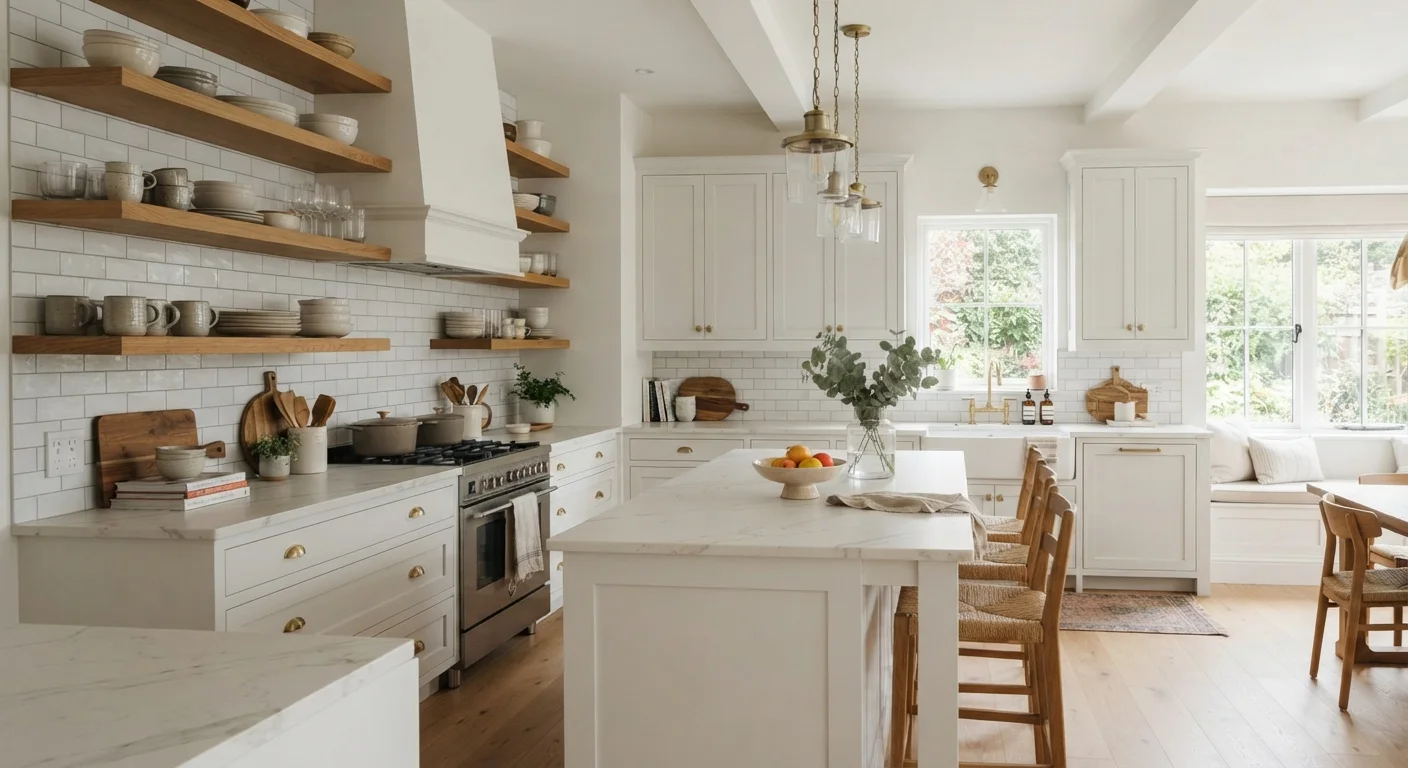
Photo: InsightsChief.com | Your Source Of Trusted Insights editorial
Key Takeaways
- Open shelving costs less upfront but requires consistent organization and more frequent cleaning.
- Upper cabinets provide significantly more concealed storage, which suits most family households.
- Open shelves can make small kitchens feel larger; cabinets help reduce visual clutter in busy spaces.
- Removing existing upper cabinets is a DIY-feasible project, but patching and repainting walls adds time and cost.
- A hybrid layout - open shelves in select zones, cabinets elsewhere - suits many renovation budgets and lifestyles.
What Each Option Actually Gives You
Upper cabinets have been the kitchen standard for decades for good reason: they provide enclosed, protected storage across nearly every wall surface above the countertop. A standard run of 36-inch-tall upper cabinets along a 10-foot wall can hold several hundred pounds of cookware, pantry staples, small appliances, and more - all hidden behind doors that require little daily maintenance.
Open shelving, by contrast, turns your storage into part of the room's décor. The shelves themselves are typically simpler and less expensive to install, but what sits on them is always visible. That visibility is both the feature and the demand: a shelf that looks intentional and calm requires ongoing editing.
| Criterion | Open Shelving | Upper Cabinets |
|---|---|---|
| Upfront material cost | Lower (shelves and brackets) | Higher (cabinet boxes, doors, hardware) |
| Storage capacity | Limited by visibility constraints | High; hides clutter behind doors |
| Cleaning frequency | High; exposed to grease and dust | Low; contents protected by doors |
| Visual effect | Opens up space, feels lighter | Adds visual mass, may feel enclosed |
| DIY difficulty | Low to moderate | Moderate to high |
| Resale appeal | Variable; depends on buyer preference | Broadly expected by most buyers |
| Flexibility to change | High; easy to reposition | Lower; removal requires wall repair |
The honest trade-off is lifestyle, not just aesthetics. If your kitchen counter tends to accumulate mail and random items, open shelves above may amplify that impression rather than improve it. If you already keep a tidy, curated set of everyday dishes, open shelving can be genuinely practical.
Cost, Installation, and DIY Considerations
From a budget standpoint, floating shelves win on material cost. A basic bracket-and-board shelf can run as little as $20-$60 per shelf installed DIY, depending on material and span. Prefabricated upper cabinets - even budget-grade flat-pack units - typically start around $75-$150 per linear foot installed, and custom cabinetry runs considerably higher.
However, if you're pulling out existing cabinets to replace them with shelves, factor in the hidden costs: patching drywall where cabinet screws and anchors were, priming, and repainting. Depending on your wall condition, that work could add several hours and real material costs to the project. Our weekend kitchen refresh guide covers low-cost prep techniques that can ease that transition.
Check Your Wall Before You Anchor
Installing floating shelves into wall studs is a straightforward DIY task for most handy homeowners. Installing upper cabinets level and plumb - especially on uneven walls - is more technically demanding and often benefits from a second pair of hands or a professional installer.
Cleaning, Maintenance, and Long-Term Realities
Upper cabinets require periodic interior cleaning, but their doors protect contents from grease, steam, and dust. Open shelves, on the other hand, expose everything to the kitchen environment. In a home with regular cooking, open shelves and their contents can accumulate a fine film of grease-laden dust within weeks - meaning dishes, jars, and decorative items all need regular wiping down.
This isn't a reason to avoid open shelving, but it's worth being realistic. Homeowners who cook heavily every day typically find the upkeep of fully open kitchens more demanding than they anticipated. A hybrid approach - keeping open shelves in a lower-traffic display zone and enclosed cabinets for everyday pantry storage - often balances both aesthetics and practicality without adding significant cost to the renovation.
~30%
Kitchen renovation projects that include cabinet changes
According to Houzz's annual Kitchen Trends Study, roughly 30% of kitchen renovations involve replacing or significantly modifying cabinetry.
$75-$150
Estimated cost per linear foot for budget upper cabinets installed
This is a general industry range for prefabricated flat-pack upper cabinets with basic installation; custom or semi-custom units cost more.
Both options are durable when installed correctly. Solid-wood or plywood shelves hold up well over time; particleboard shelves can sag under heavy loads and are better reserved for lightweight items. Upper cabinets, if level and properly anchored, should remain stable for decades with minimal attention beyond hinge adjustments.
The content provided on our blog site traverses numerous categories, offering readers valuable and practical information. Readers can use the editorial team’s research and data to gain more insights into their topics of interest. However, they are requested not to treat the articles as conclusive. The website team cannot be held responsible for differences in data or inaccuracies found across other platforms. Please also note that the site might also miss out on various schemes and offers available that the readers may find more beneficial than the ones we cover.