
Warning Lights That Drivers Too Often Ignore

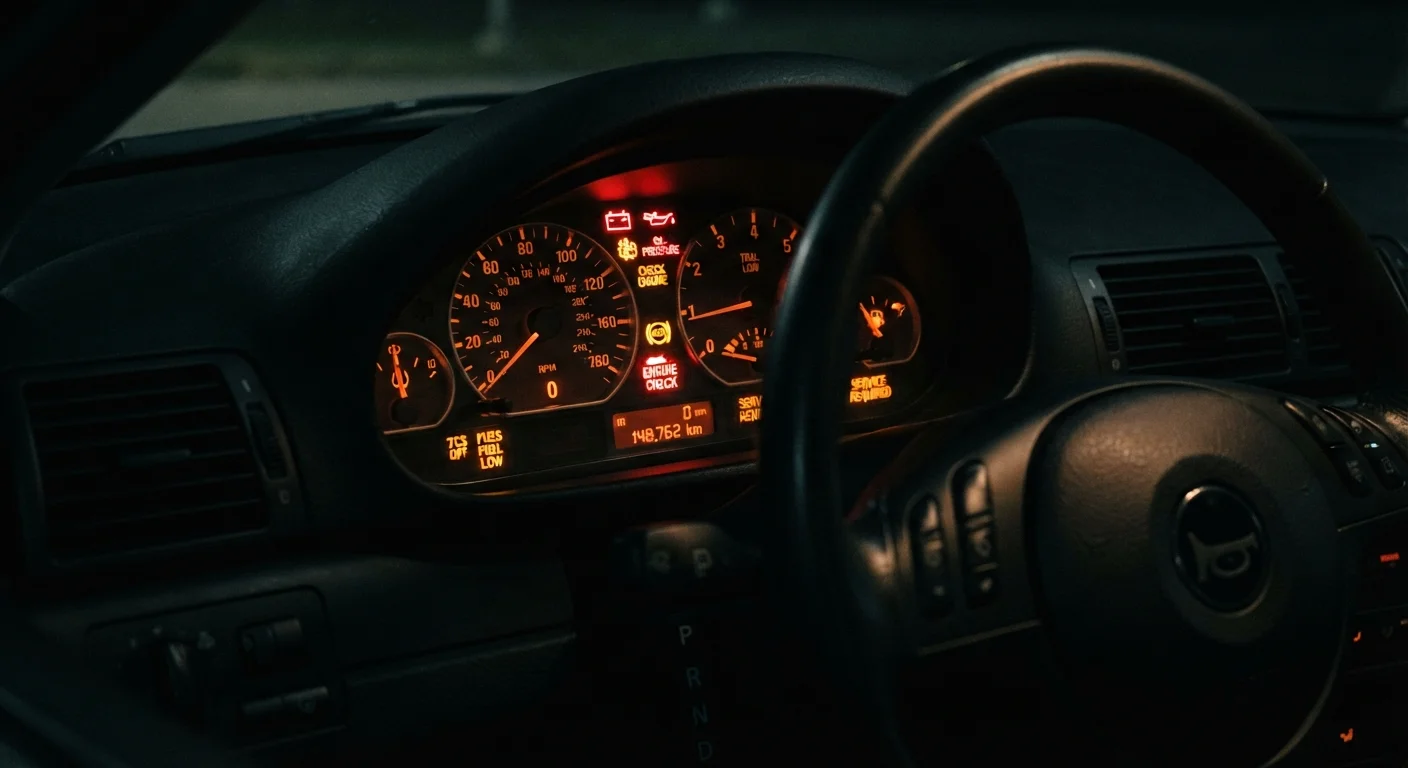
Photo: InsightsChief.com | Your Source Of Trusted Insights editorial
Key Takeaways
- Most dashboard warning lights signal problems that worsen and cost more the longer they go unaddressed.
- The check engine light alone can indicate issues ranging from a loose gas cap to a failing catalytic converter.
- Tire pressure and temperature warnings are safety-critical - driving on them risks accidents, not just repairs.
- Oil pressure and battery lights typically indicate immediate mechanical failure risks and require prompt action.
- Understanding what each light means helps budget-conscious drivers prioritize which problems need urgent attention.
Why Drivers Look Away - and What It Costs
Dashboard warning lights exist for one reason: to flag a developing problem before it becomes a much larger one. Yet surveys of drivers consistently find that a significant portion admit to driving for days - sometimes weeks - after a warning light appears. The logic usually goes something like, "The car still drives fine, so it probably isn't serious." That reasoning tends to be expensive.
Warning lights don't mean a vehicle is about to stop working. In most cases they mean a threshold has been crossed - a pressure is off, a sensor has detected an anomaly, a fluid is low. What they rarely mean is that nothing needs to happen. The pattern documented by repair shops is predictable: a $40 fix ignored long enough becomes a $400 problem, and a $400 problem ignored long enough becomes a $4,000 one. As explored in our article on how deferred maintenance multiplies repair costs, small neglected tasks compound into expensive failures.
The six lights below are those most commonly ignored - and most costly when they are.
Check Engine Light
The check engine light (officially the malfunction indicator lamp, or MIL) is the most misunderstood warning on the dashboard. Its triggers range from trivial - a loose or missing gas cap - to serious, such as a misfiring engine or failing oxygen sensor. Because the light itself doesn't indicate severity, many drivers dismiss it.
The risk of ignoring it: a minor emissions-related fault can quietly damage the catalytic converter over time. Catalytic converter replacement typically costs between $1,000 and $2,500 depending on the vehicle - far more than the underlying fault that caused it. A diagnostic scan at most shops costs between $50 and $100, and many auto parts retailers offer it at no charge.
A misfiring engine left unaddressed can destroy a catalytic converter worth over $1,000.
Oil Pressure Warning
This light - typically a red oil can icon - is one of the few that warrants pulling over promptly rather than driving to a shop. Low oil pressure means engine components are not being adequately lubricated. Running an engine under those conditions, even briefly, can cause metal-on-metal wear that results in catastrophic engine damage.
The light can indicate low oil level (which is often a simple top-off situation) or a more serious issue like a failing oil pump. Either way, the correct response is to stop the engine safely, check the oil level, and if the level is fine, have the vehicle towed rather than driven. Engine replacement or rebuilds routinely run $3,000-$7,000 or more.
Driving with low oil pressure, even for a short distance, risks irreversible engine damage.
Tire Pressure Monitoring System (TPMS) Light
The TPMS light indicates that one or more tires has dropped significantly below the recommended pressure - typically 25% or more below the vehicle manufacturer's specification. Underinflated tires affect braking distances, handling stability, and fuel economy. They also wear unevenly and are more susceptible to blowouts, especially at highway speeds.
Checking and correcting tire pressure takes about five minutes and costs nothing if you use a quality gauge and a free air station. Ignoring TPMS regularly accelerates tire wear, meaning tires that should last 50,000 miles may need replacing at 35,000. For more detailed guidance, see our tire pressure and tread depth reference card.
Chronically underinflated tires can reduce tire lifespan by 25% or more.
Battery or Charging System Warning
A battery warning light means the charging system - which includes the battery, alternator, and associated wiring - is not operating correctly. If the alternator is failing, the vehicle is running entirely off the battery's stored charge. That charge typically lasts 30-60 minutes of driving before the car stalls.
This light is frequently ignored because the car continues to run normally for a while. The consequence can be a roadside breakdown, plus the cost of both a new battery (drained by the failing alternator) and the alternator itself. Alternator replacement commonly costs $400-$900 in parts and labor. Catching a failing alternator early often means replacing only that component.
A failing alternator can drain and permanently damage an otherwise healthy battery.
Coolant Temperature Warning
The engine temperature warning - often a thermometer symbol in red - means the engine is overheating. This is a stop-the-vehicle light. Continuing to drive an overheating engine risks warping the cylinder head, blowing a head gasket, or seizing the engine entirely. Head gasket replacement alone typically ranges from $1,500 to $3,000 depending on the vehicle.
Common causes include a coolant leak, a failed thermostat, a broken water pump, or a blocked radiator. Many of these are relatively inexpensive to fix when caught early. The financial and safety stakes of ignoring this light are among the highest on this list.
Overheating for even a few miles can warp engine components beyond economical repair.
Brake System Warning Light
The brake warning light can activate for several reasons: low brake fluid, worn brake pads (on vehicles equipped with electronic pad-wear sensors), an engaged parking brake, or an ABS fault. The first priority is ruling out the parking brake. If that's not the cause, brake fluid level and condition should be checked promptly.
Low brake fluid often indicates pad wear - fluid level drops as pads wear down. Ignoring worn pads leads to metal-on-metal contact, which damages rotors. Replacing pads alone typically costs $150-$300 per axle; replacing pads and rotors together costs $300-$600 or more. This is one of the clearest examples of the cost-of-delay pattern discussed in our common ownership cost assumptions article.
Worn brake pads that go unaddressed grind through rotors, doubling or tripling the repair bill.
When You See a Light: A Practical Response Framework
Not every warning light demands pulling over immediately, but none of them warrant being ignored for weeks. A useful mental triage: red lights generally mean stop driving or pull over as soon as safely possible; yellow or amber lights mean investigate promptly - typically within a day or two, not a month. If a light appears alongside unusual sounds, smells, or handling changes, treat it as urgent regardless of color.
Know Your Vehicle's Warning Colors
Keeping a basic relationship with a trusted mechanic - even just an annual inspection - makes it easier to get quick, honest assessments when a light appears. It also helps you build an accurate picture of your vehicle's total running costs. Our annual car ownership cost audit guide offers a structured framework for doing exactly that, including tracking repair patterns over time.
This article is for general informational purposes only and does not constitute mechanical or safety advice. Always consult a qualified mechanic for diagnosis and repair decisions specific to your vehicle.
The content provided on our blog site traverses numerous categories, offering readers valuable and practical information. Readers can use the editorial team’s research and data to gain more insights into their topics of interest. However, they are requested not to treat the articles as conclusive. The website team cannot be held responsible for differences in data or inaccuracies found across other platforms. Please also note that the site might also miss out on various schemes and offers available that the readers may find more beneficial than the ones we cover.