
Battery, Alternator, and Starter: Telling Them Apart When Your Car Won't Start

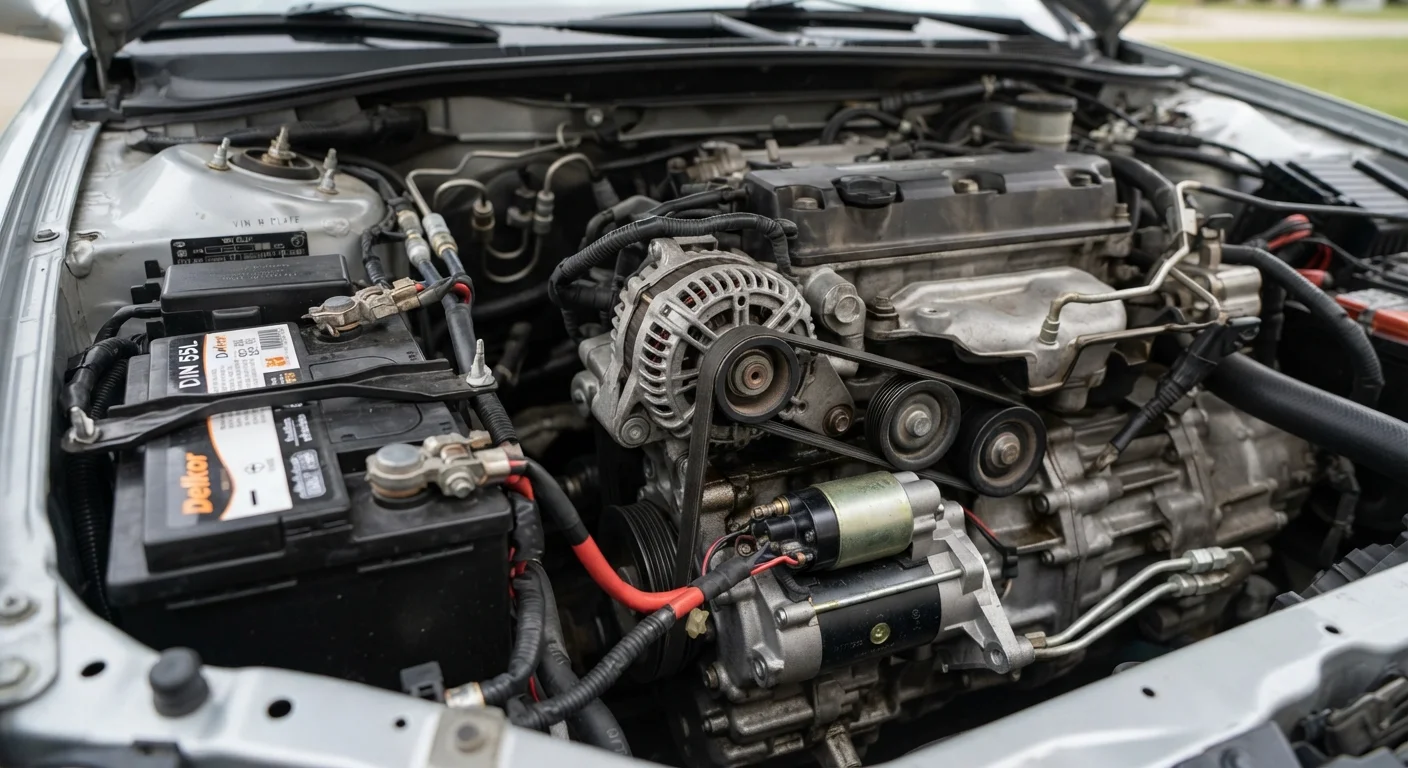
Photo: InsightsChief.com | Your Source Of Trusted Insights editorial
Why Getting the Diagnosis Right Matters
A car that won't start is one of the most stressful and inconvenient situations a driver faces - and one of the costliest to misdiagnose. Replacing a battery when the alternator is actually failing, or buying a starter when the battery is simply discharged, wastes money and leaves the real problem unsolved. Understanding what each component does and how each failure behaves is the fastest path to an accurate, affordable fix.
For a broader look at how these systems fit into your overall maintenance routine, see our first-time owner's maintenance primer.
| Typical battery lifespan | 3-5 years (General industry guidance; varies by climate and driving habits) |
| Typical alternator lifespan | 80,000-150,000 miles (General mechanical reference range) |
| Typical starter lifespan | 100,000-150,000 miles (General mechanical reference range) |
| Resting voltage of a healthy 12V battery | ~12.6 volts (Standard automotive electrical specification) |
| Voltage at which alternator charges battery | 13.7-14.7 volts (Standard automotive charging system specification) |
| Most common no-start cause | Dead or weak battery (Widely cited across automotive service data) |
What Each Component Does
Before diagnosing symptoms, it helps to know the job each part performs.
- Battery: Stores electrical energy and delivers the burst of power needed to crank the engine. It also stabilizes voltage across the electrical system when the engine is running.
- Alternator: Generates electricity while the engine runs, recharging the battery and powering all electrical loads - lights, climate control, infotainment. Without a working alternator, a fully charged battery will drain within hours of driving.
- Starter motor: An electric motor that physically cranks the engine to initiate combustion. It draws power from the battery for a few seconds at startup and is otherwise inactive.
Battery
A rechargeable electrochemical device that stores and supplies 12-volt DC power to start the engine and support electrical systems when the alternator is not running.
Alternator
A generator driven by the engine's serpentine belt that converts mechanical energy into electricity, keeping the battery charged and powering the car's electrical loads while driving.
Starter Motor
A high-torque electric motor that cranks the engine during ignition. It operates for only a few seconds per start and draws its power directly from the battery.
Solenoid
An electromagnetic switch integrated with or mounted near the starter that engages the starter gear and closes the high-current circuit when the ignition is turned.
Cold Cranking Amps (CCA)
A battery rating measuring its ability to start an engine in cold temperatures. A battery with insufficient CCA for your climate may fail to crank the engine reliably in winter.
Charging System
The combination of the alternator, voltage regulator, battery, and connecting wiring that maintains proper electrical voltage throughout the vehicle while the engine runs.
Symptom-by-Symptom Breakdown
Signs of a failing or dead battery
- Engine cranks slowly or sluggishly, especially in cold weather
- Clicking sound when you turn the key, but engine does not crank
- Dash lights, interior lights, or radio are dim or completely off
- Vehicle starts normally after a jump-start but fails again once the jumper cables are removed and the car sits
- Battery warning light may appear, though it can also signal an alternator issue
Signs of a failing alternator
- Battery repeatedly goes dead even after being replaced or recharged
- Headlights dim noticeably at idle but brighten when you rev the engine
- Electrical accessories - power windows, climate fan, radio - behave erratically while driving
- Battery or charging-system warning light stays on while the engine is running
- Car starts fine but stalls or loses power a short time into a drive
Signs of a failing starter
- Single loud click or series of rapid clicks when key is turned, with no cranking at all
- Engine does not crank despite a battery that tests as fully charged
- Grinding noise during attempted starts (worn starter gear teeth)
- Starter occasionally works on one attempt but fails on the next (intermittent failure)
- All lights and electronics function normally - only cranking is absent
Simple Tests Before Calling a Mechanic
You do not need specialized tools to narrow down the cause before visiting a shop.
- Check battery voltage with a multimeter. A fully charged 12-volt battery should read approximately 12.6 volts at rest. Below 12.0 volts suggests significant discharge; below 11.8 volts typically indicates a battery that will not hold a charge.
- Attempt a jump-start. If the vehicle starts immediately and runs well, suspect the battery first. If it starts but stalls after a short drive, the alternator is likely failing to recharge the battery.
- Listen carefully during the start attempt. Silence or a single heavy click points toward the starter or a solenoid issue. Rapid clicking almost always means insufficient battery power. Slow, labored cranking suggests a weak battery.
- Check the battery terminals. Corroded or loose terminals can mimic battery, alternator, or starter failure entirely. Clean green or white buildup with a mixture of baking soda and water before drawing any conclusions.
A basic battery and charging-system test is typically offered free at many auto parts retailers - a useful data point before authorizing any repair. When in doubt about a diagnosis or any repair involving the electrical system, consulting a qualified mechanic is the safest approach.
This article is for general informational purposes only. Automotive electrical systems can involve safety risks; consult a qualified mechanic before performing repairs beyond basic inspection.
The content provided on our blog site traverses numerous categories, offering readers valuable and practical information. Readers can use the editorial team’s research and data to gain more insights into their topics of interest. However, they are requested not to treat the articles as conclusive. The website team cannot be held responsible for differences in data or inaccuracies found across other platforms. Please also note that the site might also miss out on various schemes and offers available that the readers may find more beneficial than the ones we cover.