
Fare Alerts vs. Price Tracking Tools: Which Approach Saves More

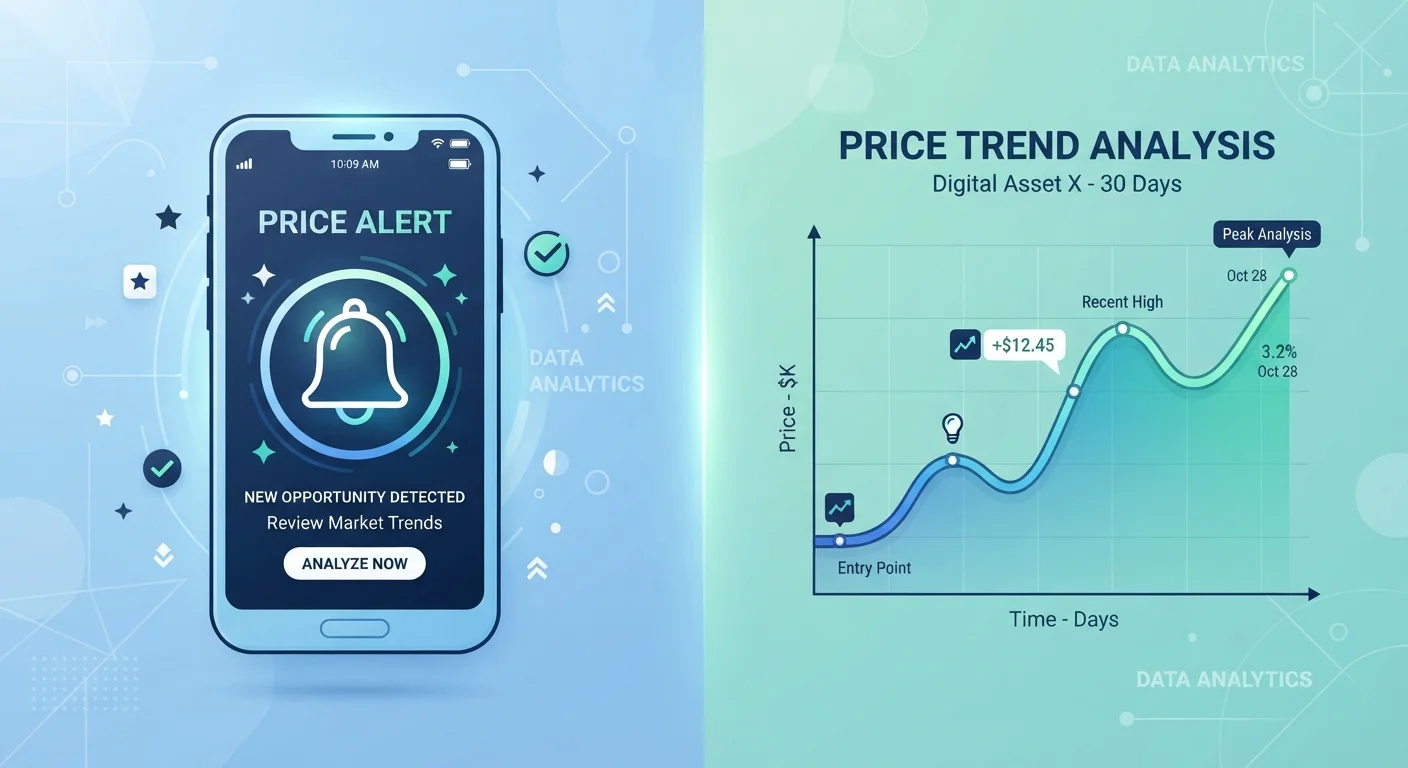
Photo: InsightsChief.com | Your Source Of Trusted Insights editorial
Key Takeaways
- Fare alerts notify you when a price drops; price trackers show how current fares compare to historical data.
- Alerts work best for flexible travelers; tracking tools suit those locked into a specific route and date range.
- Neither approach alone guarantees the lowest price - combining both reduces the chance of overpaying.
- Price history context is critical: a 'low' fare is only meaningful relative to what that route typically costs.
- Acting too slowly on fare alerts can mean missing the window before prices rebound.
What Each Approach Actually Does
Fare alerts and price tracking tools are frequently lumped together, but they work in fundamentally different ways. Understanding that distinction is the starting point for using either one effectively.
Fare alerts are push notifications triggered when a price on a specific route or destination drops below a threshold - either one you set manually or one the system determines is notable. They're reactive: you set them up, then wait. When the alert fires, you're expected to act quickly, because the prices that generate alerts often don't stay low for long. See our honest look at last-minute deal dynamics for context on how fast these windows can close.
Price tracking tools, by contrast, give you a visual or data-driven view of how a fare has moved over days, weeks, or months. Instead of telling you to act now, they help you answer a more important question: Is this fare actually low, or does it just look low? That historical context is what separates an informed booking decision from a reactive one. For a deeper look at evaluating fares against data, see what makes a flight fare worth booking.
| Criterion | Fare Alerts | Price Tracking Tools |
|---|---|---|
| Primary function | Notify when price drops | Show price history and trends |
| User role | Passive - wait for notification | Active - research and analyze |
| Best for | Flexible routes and dates | Fixed route, specific travel window |
| Historical context | Minimal or none | Core feature |
| Speed of response needed | High - act within hours | Lower - informs forward planning |
| Risk of false positives | Higher without price history | Lower - context clarifies value |
| Planning horizon | Works at any horizon | Most useful weeks to months out |
Where Each Approach Has the Edge
Fare alerts shine in scenarios where speed matters more than context. If you're open to flying anywhere within a price band - or you're watching a route you know well enough to recognize a genuine drop - an alert can land you a fare you'd never have caught through manual searching. The hands-off nature is also a practical advantage: most travelers aren't going to check flight prices every morning.
Price tracking tools earn their keep when you're committed to a specific itinerary and need confidence before committing. If you're planning a family trip six months out, knowing that fares on your route typically bottom out eight to ten weeks before departure - and that the current price sits above that historical average - gives you a concrete reason to wait rather than book impulsively.
~8 weeks
Typical low-price window before domestic US departure
Airline pricing research has generally found domestic fares in the US tend to be more competitive roughly six to eight weeks before departure, though this varies significantly by route and season.
30-40%
Potential fare variation on the same route over time
Studies of airfare fluctuation have observed that prices on identical routes can vary by 30 to 40 percent or more depending on booking timing, day of week, and demand cycles.
The practical risk with alerts alone is what might be called alert fatigue: receiving frequent notifications that turn out to be marginal drops, or missing the context to know whether a flagged price is genuinely unusual. A price tracker addresses this directly. As covered in our guide to finding cheaper flights from search to purchase, combining both tools in a deliberate workflow tends to outperform relying on either one in isolation.
It's also worth noting that neither approach accounts for the full cost of a trip. A low base fare accompanied by high ancillary fees can easily erase any savings - a pattern explored in depth in our piece on why the cheapest option often costs more over time. For a broader framework on avoiding planning missteps, see common trip-planning errors and how to sidestep them.
Alerts Work Differently by Platform
The content provided on our blog site traverses numerous categories, offering readers valuable and practical information. Readers can use the editorial team’s research and data to gain more insights into their topics of interest. However, they are requested not to treat the articles as conclusive. The website team cannot be held responsible for differences in data or inaccuracies found across other platforms. Please also note that the site might also miss out on various schemes and offers available that the readers may find more beneficial than the ones we cover.