
Public School vs. Charter School: What Families Should Weigh Before Choosing

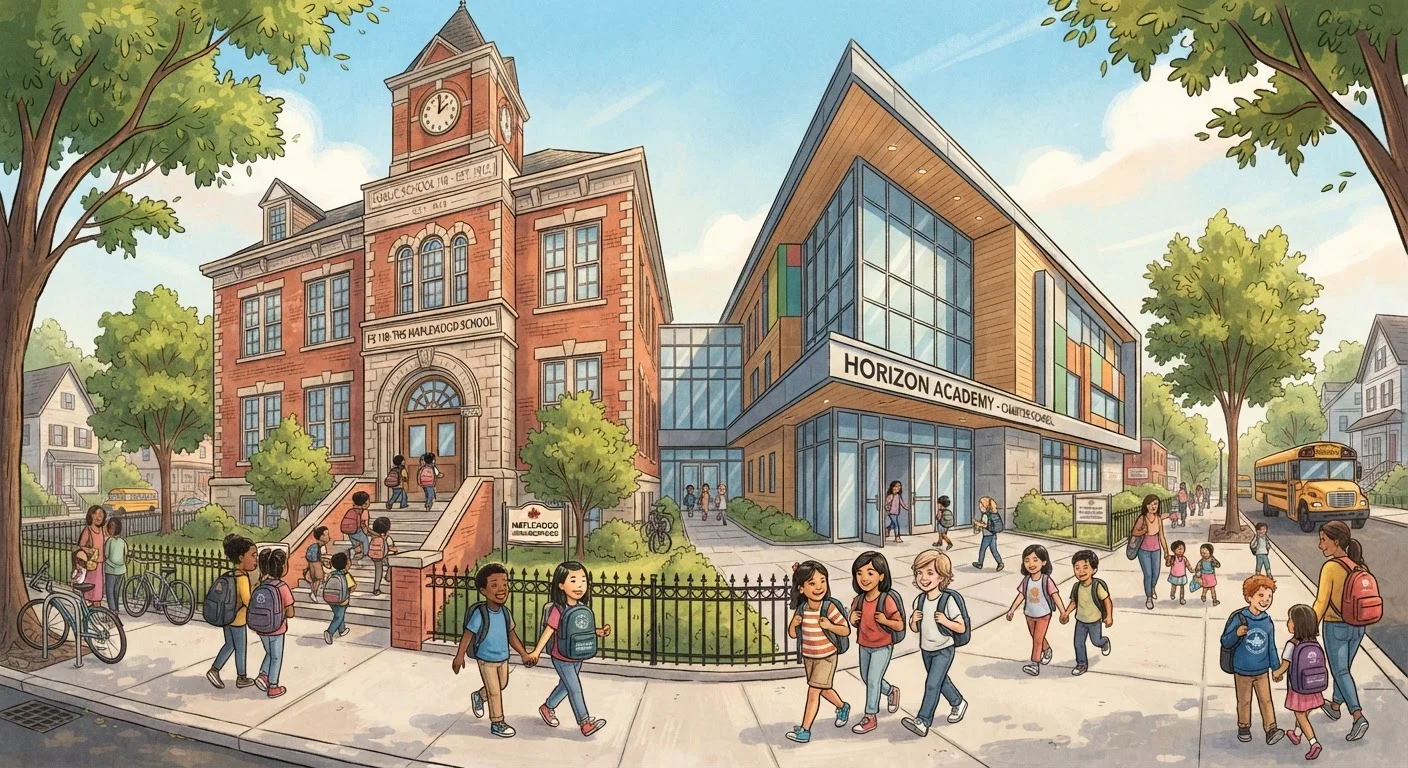
Photo: InsightsChief.com | Your Source Of Trusted Insights editorial
Key Takeaways
- Both public and charter schools are publicly funded and free to attend - no tuition required.
- Charter schools often have more curriculum flexibility but may have limited seats and lottery-based enrollment.
- Traditional public schools must accept all students in their district zone, making access more predictable.
- Hidden costs like transportation, uniforms, and activity fees can differ significantly between school types.
- Neither option is universally superior - the right fit depends on your child's learning style and your family's logistics.
How Each School Type Is Funded and Who Can Attend
A common misconception is that charter schools are private schools. They are not. Both traditional public schools and charter schools receive government funding tied to student enrollment - meaning neither charges tuition. The key difference is in how that funding flows and who governs the school.
Traditional public schools are operated by local school districts, funded through a combination of local property taxes, state allocations, and federal dollars. Every child within a defined geographic zone is entitled to enroll - no application required.
Charter schools are independently operated under a charter (essentially a performance contract) granted by an authorizing body - often a state agency or local school board. They receive per-pupil public funding but operate outside many district regulations. Enrollment is typically open to any resident of the state, but seats are limited. When demand exceeds capacity, most charter schools use a random lottery system.
| Traditional Public School | Charter School | |
|---|---|---|
| Tuition | Free (publicly funded) | Free (publicly funded) |
| Enrollment Process | Zone-based, guaranteed | Application + lottery if oversubscribed |
| Curriculum | State/district-mandated standards | Flexible, often themed or specialized |
| Teacher Licensing | State licensure typically required | Requirements vary by state and charter |
| Special Education Services | Comprehensive, district-supported | Required by law; depth varies by school |
| Transportation | Usually provided within district | Often limited or not provided |
| Accountability | Local school board oversight | Charter authorizer; school can be closed |
For families on a budget, both options are tuition-free, but it's worth checking whether your local charter school requires a uniform (adding upfront clothing costs) or whether transportation is provided, since some charter schools do not offer bus service - a real logistical and financial factor to weigh.
Curriculum Flexibility and Classroom Approach
Traditional public schools follow state academic standards and use district-approved curricula. Teachers are typically required to hold state licensure, and the school must offer a full range of subjects including special education services, English language learning, and federally mandated programs.
Charter schools, by design, have more freedom to experiment. A charter school might focus on STEM, arts integration, project-based learning, or a specific educational philosophy like Montessori or expeditionary learning. This flexibility is often the primary draw for families seeking something different from the standard district model.
Research a Charter School's History Before Applying
That said, flexibility cuts both ways. Charter schools are accountable to their charter authorizers for academic performance, and schools that consistently underperform can be closed - something to look into when researching options. Check how long a school has been operating and whether its charter has been renewed.
If your child has an Individualized Education Program (IEP) or receives specialized services, it's especially important to ask charter schools directly how they deliver those services. While charter schools are legally required to serve students with disabilities, the depth of available support can vary considerably from school to school.
Enrollment, Logistics, and What Families Often Overlook
With a traditional public school, enrollment is straightforward: submit proof of residency and your child is in. Charter school enrollment typically involves submitting an application during an open enrollment window and, if oversubscribed, waiting for a lottery result - a process that can be stressful, particularly if you're planning for the following school year.
Families sometimes underestimate the practical day-to-day differences. Transportation is one of the biggest. Many charter schools do not provide busing or provide it only within a limited radius. If you're relying on public transit or arranging your own drop-off, factor that cost and time into your decision - especially if you have more than one child at different schools.
Parent involvement expectations also differ. Some charter schools are built around a high-involvement model with required volunteer hours. This can be a wonderful community experience or a difficult commitment depending on your work schedule and family situation.
For families exploring all educational options - including at-home learning - our overview of homeschooling trade-offs and costs lays out what that path actually looks like day-to-day. And once you've chosen a school, our family learning readiness checklist can help you prepare for a smooth start. You might also find it useful to explore free vs. paid educational apps for kids to support learning at home regardless of which school you choose.
Questions Worth Asking Before You Decide
No article can tell you which school is right for your child - that depends on your family's specific needs, your child's learning style, and what each individual school actually looks like in practice. But these questions can sharpen your research:
- What is the school's student-to-teacher ratio? Smaller class sizes aren't guaranteed at either type.
- How does the school handle special education or learning differences? Ask for specifics, not generalities.
- What are the real transportation and supply costs? Get numbers, not estimates.
- What does parent involvement actually require? Mandatory hours can be a dealbreaker for some families.
- What is the school's track record? Look at publicly available performance data for context, but don't rely on a single metric.
Visiting both a local public school and a charter school - even briefly - often tells families more than any comparison chart. The feel of a school community, how staff interact with students, and how organized the administration seems are all meaningful signals that data alone won't capture.
For families interested in exploring the broader landscape of learning approaches, our Family Learning hub is a good starting point.
The content provided on our blog site traverses numerous categories, offering readers valuable and practical information. Readers can use the editorial team’s research and data to gain more insights into their topics of interest. However, they are requested not to treat the articles as conclusive. The website team cannot be held responsible for differences in data or inaccuracies found across other platforms. Please also note that the site might also miss out on various schemes and offers available that the readers may find more beneficial than the ones we cover.