
Setting Up a Home Learning Space on a Shoestring Budget

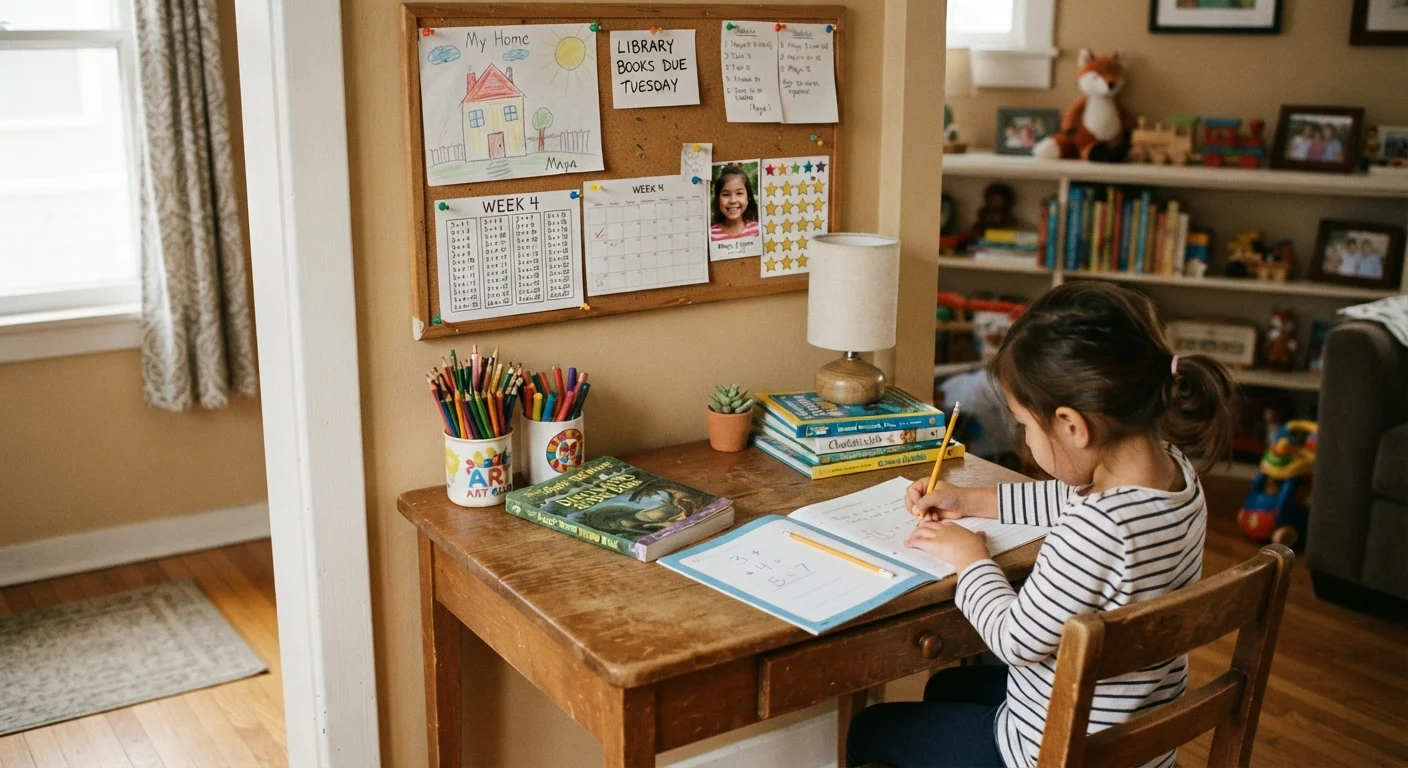
Photo: InsightsChief.com | Your Source Of Trusted Insights editorial
Key Takeaways
- A dedicated learning space improves focus and signals to kids that learning time matters.
- Most effective setups can be assembled using items already in your home.
- Reducing visual clutter and noise is more important than buying new furniture.
- Free library resources, printables, and apps can stock your space at no cost.
- Consistency of location matters more than size or decor.
Why a Dedicated Space Makes a Real Difference
You don't need a spare room or a large budget to create an effective home learning environment. What you do need is consistency. Educational researchers have long noted that children transition into focused work more easily when they associate a specific physical location with that activity - the same way adults often find it easier to sleep in a bedroom than on the sofa.
This is especially relevant if your household is also weighing different approaches to learning at home. Our comparison of structured homeschooling and unschooling explores how the physical environment fits into each philosophy.
The Space Signals That Learning Matters
The good news: the most impactful features of a learning space - reduced clutter, adequate light, organized supplies, and a predictable routine - cost almost nothing to implement. This guide walks you through exactly how to get there.
What You'll Need to Get Started
Before diving into the steps, take stock of what you already own. Most households have everything required for a functional learning space with no shopping trip needed.
What you will need
Dedicated flat surface (table, desk, or sturdy board)
Provides a stable writing and working surface for all learning activities.
Supportive chair adjusted to child's height
Reduces physical fatigue and helps children maintain focus during seated work.
Corkboard, pegboard, or wall-safe adhesive strips
Allows you to display schedules, alphabet charts, and completed work without damaging walls.
Supply organizer or repurposed containers (jars, boxes)
Keeps pencils, crayons, scissors, and rulers sorted and within reach.
Clip-on or desk lamp
Ensures adequate lighting to prevent eye strain during reading and writing.
Headphones or earmuffs
Helps block household noise so the child can concentrate in a shared space.
If your child is working on foundational reading skills alongside setting up this space, our article on supporting a struggling reader at home pairs well with this setup guide.
Step-by-Step: Building Your Budget Learning Corner
Choose and claim a consistent spot
Walk through your home and look for any underused area: a corner of the living room, the end of a hallway, an unused dining table chair position, or even a large closet with the doors removed. The key quality isn't square footage - it's repeatability. Children focus better when their brain associates a specific physical location with learning. Pick the spot, and commit to it.
Set up a proper work surface and seating
Check what you already have before buying anything. A folding table, the kitchen table during off-hours, or even a sturdy board laid across two low shelves can work well. Pair it with a chair adjusted so your child's feet rest flat and their arms sit comfortably at desk height. Poor posture during learning sessions leads to restlessness and fatigue - proper fit matters more than appearance.
Reduce visual and auditory distractions
Clear the immediate area of toys, remote controls, and unrelated clutter. Use a simple curtain, bookshelf, or even a large piece of cardboard as a visual divider if the space is open-plan. If your home is noisy, inexpensive foam earmuffs (often found at hardware stores) or a pair of over-ear headphones playing soft background music can work well for older children.
Organize supplies using what you have
Raid your recycling bin before buying organizers. Clean tin cans, glass jars, and small cardboard boxes make excellent pencil holders and supply sorters. Group items by type: writing tools together, craft supplies separate, reference books stacked nearby. Label everything in a way your child can read - this builds independence and reduces the "where is my eraser?" interruptions.
Add free or low-cost reference materials
Your public library is one of the most underused resources in the US. A free library card grants access to physical books, e-books, audiobooks, and often free digital subscriptions to educational databases. Print free resources - alphabet charts, multiplication tables, world maps - from reputable sites like those run by state education departments. Pin these to a corkboard or tape them at eye level.
For a broader look at free tools and approaches, see our complete guide to at-home educational enrichment for US families.
Establish a visible daily schedule
Write or print a simple daily learning schedule and post it at the child's eye level in the space. Children - especially younger ones - benefit enormously from predictable rhythms. Break sessions into manageable chunks (20-30 minutes for younger children, 45 minutes for older ones) and include planned movement breaks. Knowing what comes next lowers resistance to sitting down in the first place.
Test the setup and adjust over time
Use the space for a week before making any purchases. Notice what's causing friction - is the lighting too dim? Are supplies hard to reach? Is there too much background noise? Let real use guide any small improvements rather than spending upfront on a theoretical ideal. A cheap clip-on lamp or a cardboard divider may solve 80% of the problems for next to nothing.
Don't Overlook the Library - Seriously
For families considering a more formal homeschooling approach, our overview of homeschooling on a budget covers curriculum options and realistic cost expectations in more detail.
Keeping Costs Low Over the Long Term
Once the space is up and running, ongoing costs can stay minimal with a few habits. Rotate library books regularly to keep content fresh. Download free printable worksheets from state education department websites and nonprofit educational platforms rather than buying workbooks. When supplies run low, check dollar stores and end-of-school-year sales - both are reliable sources of basic stationery at very low prices.
If you're tackling other low-cost home improvements alongside this project, the home improvement hub and our parenting tips hub both offer budget-conscious guidance across a range of household projects.
Most importantly, resist the urge to equate spending with quality. A consistent schedule, an organized surface, and a child who knows that this corner belongs to learning will outperform any expensive desk setup used inconsistently.
The content provided on our blog site traverses numerous categories, offering readers valuable and practical information. Readers can use the editorial team’s research and data to gain more insights into their topics of interest. However, they are requested not to treat the articles as conclusive. The website team cannot be held responsible for differences in data or inaccuracies found across other platforms. Please also note that the site might also miss out on various schemes and offers available that the readers may find more beneficial than the ones we cover.